Resources
Resources
Don’t have Adobe Reader? Click Here to download Adobe Reader.
FREE LOCKOUT PROCEDURE GUIDE
Cirlock Free Lockout Tagout (LOTO) Procedure Template – Download NOW

To view Master Electricians Australia LOTO Reference Guide – Click Here
ELECTRICAL SAFETY OFFICE
STATE REGULATORS
NSW – SafeWork NSW
https://www.safework.nsw.gov.au
QLD – Workplace Health and Safety Queensland
https://www.worksafe.qld.gov.au
VIC – WorkSafe Victoria
https://www.worksafe.vic.gov.au
WA – WorkSafe WA
https://www.commerce.wa.gov.au/worksafe
SA – SafeWork SA
https://www.safework.sa.gov.au
TAS – WorkSafe Tasmania
https://worksafe.tas.gov.au
ACT – WorkSafe ACT
https://www.worksafe.act.gov.au
NT – NT WorkSafe
https://worksafe.nt.gov.au
Lockout Tagout Explained:
Keeping Australian Workplaces Safe and Compliant
Keeping Australian Workplaces Safe and Compliant
Lockout Tagout (LOTO) Requirements in Australia
- Regulations & Standards
Lockout Tagout in Australia is governed primarily by Work Health and Safety (WHS) legislation, which is harmonised across most states and territories. Under these laws, Persons Conducting a Business or Undertaking (PCBUs) must ensure that workers are protected from the unexpected start-up of machinery or the release of hazardous energy.
In practice, this means businesses must ensure that:
- All hazardous energy sources can be effectively isolated so equipment cannot restart during maintenance
- Workers are protected from the unexpected release of energy, including electrical, mechanical, hydraulic, pneumatic, chemical, thermal, and gravitational energy
Under the Work Health and Safety Regulation 2011 (in harmonised jurisdictions):
- Plant must be designed or fitted so operator controls can be locked in the “off” position
- Before maintenance or cleaning, equipment must be shut down, isolated, and prevented from moving or becoming energised
👉 Learn more:
- Work Health and Safety Regulations 2011 – Safe Work Australia
Safe Work Australia also provides detailed guidance in the Model Code of Practice: Managing the Risks of Plant in the Workplace, which strongly recommends formal Lockout Tagout procedures. The Code states that a reliable energy isolation system is essential for managing plant risks.
👉 Reference:
In addition to WHS laws, several Australian Standards provide technical guidance on isolation and lockout, including:
- AS/NZS 4836:2011 – Safe working on or near low-voltage electrical installations
Focuses on isolating electrical circuits at switchboards and applying locks and tags. - AS 4024.1603-2006 – Safety of machinery
Addresses the prevention of unexpected machinery start-up through lockable isolators.
While Australian Standards are not laws, complying with them helps demonstrate that you have taken “all reasonably practicable” steps to meet WHS obligations.
Mining-Specific Requirements
Certain industries—particularly mining—are subject to additional legislation and guidance. For example, Queensland mining safety guidance requires formal isolation and lockout systems, reinforcing that before any maintenance or repair, workers must:
- Shut down and de-energise plant
- Lock all isolation points with personal padlocks
- Tag locks with clear identification
- Verify zero energy before work begins
👉 Example guidance:
Failure to implement effective Lockout Tagout has repeatedly resulted in serious injuries and fatalities. Regulators actively prosecute businesses that neglect isolation requirements, with penalties including substantial fines and imprisonment following workplace deaths or serious harm.
Bottom line: If work exposes anyone to potential energy release or unexpected start-up, Lockout Tagout is a legal requirement across Australian industries.
- When Is Lockout Tagout Required?
Lockout Tagout is required whenever there is a risk of injury from the accidental start-up of machinery or the release of hazardous energy. This includes tasks such as:
- Maintenance, repair, or servicing
- Cleaning or unjamming where body parts enter danger zones
- Inspection, installation, or testing near live or moving parts
- Adjustments that require guards or safety devices to be removed
If a worker could be harmed by unexpected motion, electricity, pressure, heat, or chemical release, Lockout Tagout must be used.
This applies to all energy types, including:
- Electrical – locking circuit breakers, switches, or fuses
- Hydraulic/Pneumatic – locking valves and releasing stored pressure
- Mechanical – blocking or bracing moving components
- Gravity – securing elevated loads or machine parts
- Thermal/Chemical – isolating and cooling hot or pressurised substances
Regulators such as WorkSafe Victoria have repeatedly warned that simply pressing an “off” button is not enough. Many fatalities have occurred after equipment unexpectedly restarted during clearing or maintenance tasks.
👉 Reference:
If there’s a risk of unexpected energisation, Lockout Tagout is mandatory.
- Policies & Procedures
A documented Lockout Tagout policy and procedure is essential for compliance. A typical policy outlines:
- The purpose of Lockout Tagout
- Roles and responsibilities
- Which equipment and tasks require LOTO
- Training, auditing, and review requirements
Procedures should provide step-by-step instructions to:
- Shut down equipment using normal controls
- Identify all energy sources
- Isolate each source
- Apply personal locks and tags
- Release or restrain stored energy
- Test controls to confirm zero energy
Equipment-Specific Procedures
Complex machinery often has multiple energy sources. Generic procedures may be inadequate. Equipment-specific instructions should clearly identify:
- All isolation points
- Locking methods for each point
- Stored energy release steps
- Hidden or secondary hazards
These instructions should be posted near the equipment or included in maintenance manuals.
Good vs. Poor Documentation
Good documentation is clear, detailed, current, and accessible. Poor documentation is vague, outdated, or incomplete—and often leads to shortcuts and accidents. Procedures should be reviewed regularly, especially after incidents or equipment changes.
- Industry-Specific Applications
Mining
Mining operations involve high-energy, complex systems and often require group lockout procedures, lock boxes, and permit-to-work systems. Strict Lockout Tagout compliance is critical to prevent catastrophic incidents.
Construction
Construction sites involve multiple trades and constantly changing hazards. Lockout Tagout is essential for electrical work, mobile plant maintenance, and isolation of services. Clear communication and multi-lock systems are vital.
Manufacturing
Manufacturing plants frequently involve repetitive maintenance, multiple shifts, and mixed energy sources. Best practice includes equipment-specific procedures, mandatory testing after lockout, and “no lock, no work” policies.
- Training & Assessment
Australian WHS laws require employers to ensure workers are trained and competent in safe work procedures. While there is no national LOTO licence, competency must be demonstrated.
Training should cover:
- Types of hazardous energy
- Company Lockout Tagout procedures
- Correct use of locks, tags, and lock boxes
- Group lockout and emergency protocols
Hands-on training and competency assessments are critical, with refresher training conducted when equipment changes or incidents occur.
👉 Regulators emphasise competency:
- Lockout Tagout Equipment
Effective Lockout Tagout relies on the right equipment, including:
- Safety Padlocks – personal, keyed-different locks
- Lockout Hasps – allow multiple workers to apply locks
- Tags – identify who locked equipment and why
- Valve & Circuit Breaker Lockouts – secure isolation points
- Cable Lockouts – flexible solutions for complex setups
- Group Lock Boxes – ideal for large teams or multiple energy sources
For industrial-grade Lockout Tagout equipment, we have a comprehensive range designed to meet Australian workplace requirements.
- Case Studies & Lessons Learned
Real incidents across Australia show that Lockout Tagout failures often result from unclear procedures, inadequate training, or reliance on tags alone. In contrast, workplaces with robust LOTO systems consistently prevent serious injuries and fatalities.
Conclusion
Lockout Tagout saves lives. While it requires discipline, training, and proper equipment, the alternative—serious injury, death, and legal consequences—is far worse.
Australian WHS laws clearly expect businesses to implement effective Lockout Tagout systems wherever hazardous energy is present. With the right policies, procedures, training, and equipment, unexpected machine start-ups can be eliminated.
Cirlock Pty Ltd is proud to support Australian workplaces with a full range of Lockout Tagout solutions to help businesses stay compliant and keep workers safe.
This guide is for general information only and does not replace professional legal advice. Always consult current WHS legislation and qualified safety professionals relevant to your State or Territory.
Featured Products
Featured Products
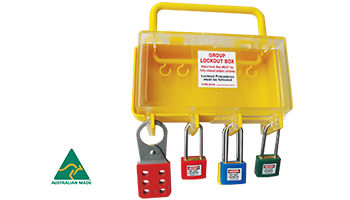
Group Lock Box
GLB-2 Made in Australia from High Impact Acrylic - Suits 16 Padlocks
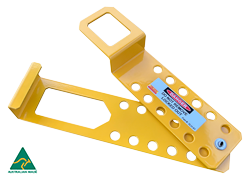
Lockout Hasp
12 Hole Aluminium Lockout Hasp ideal lockout solution for small group isolation. Proudly Australian Made.
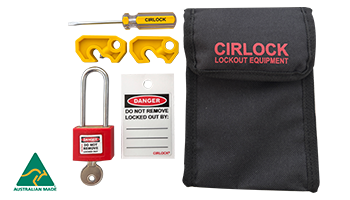
Mini Lockout Kit
PLK-4 - Our New Mini Lockout Kit is Made in Australia & Perfect for Miniature Circuit Breaker Lockout!